A manufacturer specializing in the production and research and development of testing machines, integrating pre-sales consultation, research and development, production, manufacturing, and service
Current location:
Home >
News>
Company News>Servo Hydraulic Testing Machine: Static Testing Versus Fatigue Duty
A servo hydraulic testing machine uses feedback to control a hydraulic loading system. That description alone does not tell a buyer whether the machine is intended for static material testing, cyclic loading, or a demanding fatigue programme. The required loading history must lead the specification. This guide explains how to distinguish those requirements and ask for evidence that matches the proposed application.
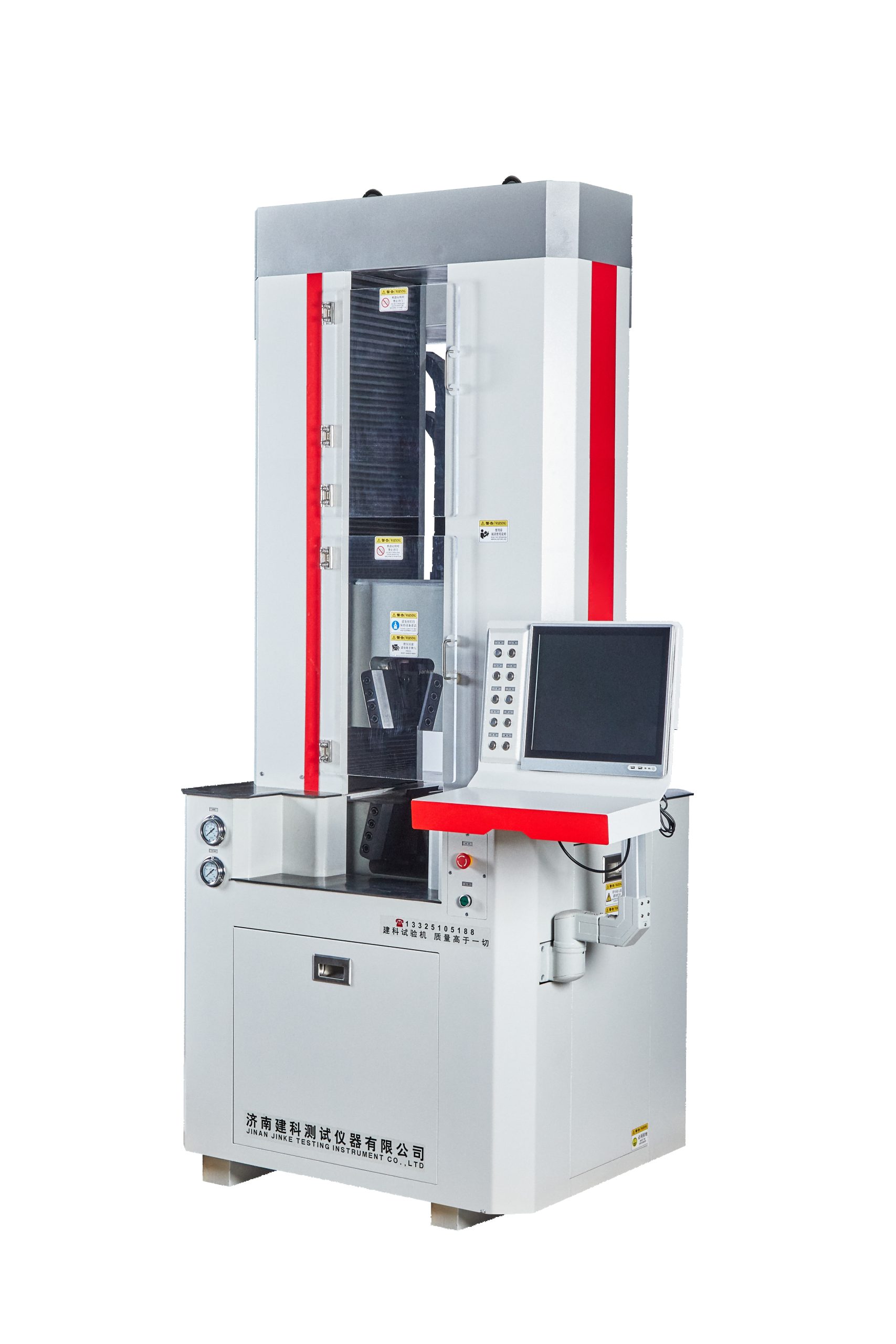
WAW — Electro-hydraulic servo hydraulic universal testing machine. Product illustration. Confirm the exact configuration for your specimens.
Write the loading history before using the word servo
For a monotonic tensile test, the essential requirement may be stable control through the approved loading stages until a specified stopping condition. A fatigue programme adds repeated loading and can introduce requirements for frequency, amplitude, waveform, long-duration operation, and dynamic measurement. Two machines with the same nominal maximum force may have very different capabilities when those conditions are considered.
Ask the supplier to state the intended operating duty of the exact offered configuration. Include the specimen's expected stiffness, the complete load path, and any environmental equipment. Where a cyclic application is intended, discuss the permitted operating envelope and the verification required for the relevant measurements. An isolated demonstration at one setting should not be generalized to every frequency or specimen.
The procurement record should make the application boundary explicit. A static hydraulic universal machine can be a suitable choice for static tests without being a fatigue system. Conversely, buying cyclic capability only makes sense when the laboratory can specify and use it. A precise description avoids paying for an unclear feature or discovering that a presumed capability was never included.
An illustrative application review
Consider an illustrative buyer who requests a servo hydraulic machine for steel tests. A clarification reveals that the routine work is a static tensile test, while an additional project involves repeated loading of components. The buyer separates the two programmes and asks suppliers to identify which configuration supports each one. The resulting acceptance plans differ because a successful static coupon test does not demonstrate the repeated-loading operating envelope of the component project.
Identify whether the task is static, cyclic, or fatigue testing
A static tensile or compression procedure and a cyclic fatigue programme place different demands on the actuator, fixtures, controller, transducers, cooling, and data acquisition. A hydraulic drive does not by itself establish that the equipment is suitable for fatigue testing. Ask for the manufacturer's explicit operating capability for the proposed loading history, amplitude, frequency, and specimen stiffness.
For cyclic applications, discuss dynamic force measurement, control stability, fixture fatigue ratings, safety provisions, and the criteria for stopping a damaged specimen. Static verification documents alone do not describe every dynamic operating condition. If the actual requirement is an ordinary monotonic material test, specify that clearly and evaluate the machine on its static method performance. Defining the loading history early prevents a buyer from assuming that two systems with similar appearances or nominal force ratings are interchangeable.
Evaluate feedback quality through the whole test
Closed-loop control compares a requested value with a measured signal and adjusts the drive to reduce the difference. For a testing machine, the useful question is how that loop behaves with the intended specimen, fixtures, and control mode. The name of a controller or actuator does not establish performance during approach, yielding, unloading, or a hold period.
Define which signal is controlled in each stage and how the transition occurs. Observe overshoot, oscillation, lag, and the recorded rate using a representative test. Specimen stiffness and fixture compliance can change loop behaviour, so a satisfactory unloaded demonstration is incomplete evidence. Keep control settings within an approved method and record service adjustments. The acceptance record should show that the supplied system can follow the required procedure without relying on undocumented intervention by an unusually experienced operator.
Evaluate the hydraulic system as a complete circuit
For a hydraulic testing system, ask how the actuator, pressure source, valves, transducer, and controller work together over the proposed test range. Pressure is part of the drive mechanism, while the force measurement arrangement must be established for the actual machine. Do not treat pump power, pressure rating, and verified specimen force as interchangeable specifications.
Discuss warm-up, oil condition, leakage inspection, filtration, cooling needs, noise, and the location of the power unit. The appropriate arrangements depend on the supplied model and operating duty. For frequent low-rate or hold segments, demonstrate the control behaviour with a representative specimen and review the resulting history. Ask how the manufacturer supports troubleshooting and replacement parts for the circuit. Those practical details affect the laboratory's ability to maintain consistent operation after the initial acceptance test.
Include specimen-specific protective arrangements
The risk during a mechanical test depends on the specimen and fixtures as well as the applied force. Brittle fragments, released strain energy, moving grips, pinch points, and unsecured adapters can require different protective arrangements. Select enclosures, shields, operating distances, and handling practices through the laboratory's assessment and the equipment instructions. An emergency stop is one protective function within that arrangement.
During commissioning, demonstrate the intended overload response, travel limits, stopping behaviour, and safe procedure for changing fixtures. Define how the system is isolated before maintenance or adjustment near moving or pressurized parts. Training should include the materials actually tested and the action required after a specimen behaves unexpectedly. Make accessory load ratings easy to identify. A machine's frame capacity does not authorize loading a smaller fixture, adapter, or extensometer beyond its own operating limits.
Plan installation around the supplied assembly
Obtain the dimensions and weights of the complete system, including its control cabinet, power unit, computer, accessories, and transport packaging. Check doorways, floor access, lifting arrangements, operating clearance, and service access before delivery. A frame that fits the available floor area may still be difficult to install if the route into the laboratory has not been measured.
Confirm electrical requirements, protective earthing, ambient limits, and any hydraulic, pneumatic, or cooling connections for the quoted model. Foundation and anchoring requirements should follow the supplier's installation instructions and local engineering requirements. Identify the people responsible for unloading, positioning, commissioning, and calibration. Reserve time for installation checks before accepting production samples. The first operational test should establish that the assembled system works correctly in its final location, with the intended utilities and accessories.
Compare the delivered package for an overseas laboratory
International equipment purchasing involves the machine, its documentation, transport, installation responsibilities, and continuing support. Ask for a clear list of included accessories and identify which party provides unloading, utilities, positioning, commissioning, training, and calibration. Discuss packing dimensions, lifting information, transport insurance, delivery terms, and the documents required at the destination.
Product conformity requirements depend on the destination and supplied configuration. Request relevant documents for the exact offered model and verify their scope instead of treating a logo on a brochure as sufficient evidence. Agree the language of manuals and support, the process for remote diagnosis, and availability of replacement wear items. These decisions belong in the commercial and technical agreement. They help the buyer compare total usable capability, including the work needed to bring the equipment into routine service.
Compare lifetime operating costs with initial price
Purchase price covers only part of the laboratory's commitment. Include the fixtures and transducers needed for the intended workload, calibration, installation, training, consumables, utilities, software arrangements, and planned service. A configuration with a low base price can become expensive when essential measurement accessories or site work are added after delivery.
Ask suppliers to separate included items from options and explain the assumptions behind their recommendations. Estimate the cost of changing between test types and the effect of downtime on the testing schedule. A second sensor or a dedicated fixture can be valuable when it supports the required measuring range or reduces setup errors. Compare these benefits using the laboratory's own specimen mix. Avoid assigning a financial return to faster testing unless the full preparation, handling, and reporting workflow has also been considered.
Choose the test method before choosing a software template
Begin with the current contract, product specification, or laboratory procedure that defines the property to be reported. Different standards can address similar materials while using different specimens, rates, measurement requirements, or calculations. A software template named after a standard still needs to be checked against the edition and options required for the particular job.
Record the selected method and its approved settings with the equipment configuration. If the method allows choices, document the choice instead of leaving an operator to infer it from a previous test. Obtain the full applicable standard and any governing product documents when developing the procedure. Equipment selection guides and standards catalogue summaries help identify relevant documents, but they do not contain all of the normative instructions needed to establish conformity for a completed material test.
Frequently asked questions
Does servo hydraulic automatically mean fatigue capable?
No. Confirm the manufacturer's explicit capability for the required loading history, frequency, amplitude, specimen stiffness, accessories, and operating duty. Static verification alone does not establish every aspect of dynamic performance.
What should I send with a configuration inquiry?
Send specimen drawings or photographs, material and dimension ranges, expected forces, required properties, test methods, workload, and installation conditions. Ask the supplier to identify the proposed sensors, grips, software functions, verification, and acceptance procedure. A representative sample demonstration can help resolve details that a model name alone cannot establish.
Discuss the application with Jinan Jianke
Jinan Jianke supplies material testing equipment for laboratory and production applications. Use the WAW product page as a starting point for an application discussion. Send your specimen information and required method through our contact page, and request a configuration-specific proposal, documentation, and representative test evidence.
Standards references
Identify the method applicable to your material and contract, and consult its full requirements. Relevant official catalogue entries include ISO 6892-1, ASTM E8/E8M. Listing a standard does not establish conformity of a particular machine configuration or completed test.
Talk to an application specialist
Request a Quote
Share your testing requirements. We will reply with a suitable configuration and quotation within one business day.
Technical selectionWorldwide deliveryAfter-sales support