A manufacturer specializing in the production and research and development of testing machines, integrating pre-sales consultation, research and development, production, manufacturing, and service
Current location:
Home >
News>
Company News>Tensile Testing Machine Manufacturer: How to Compare Export Quotations
Comparing a tensile testing machine manufacturer involves more than placing frame capacities and prices next to each other. Overseas buyers need a clear match between their application and the supplied package, together with an acceptance and support plan. Two quotations can describe similar machines while including different measurement accessories or commissioning responsibilities. This guide explains how to create a comparison that remains useful after the order is placed.
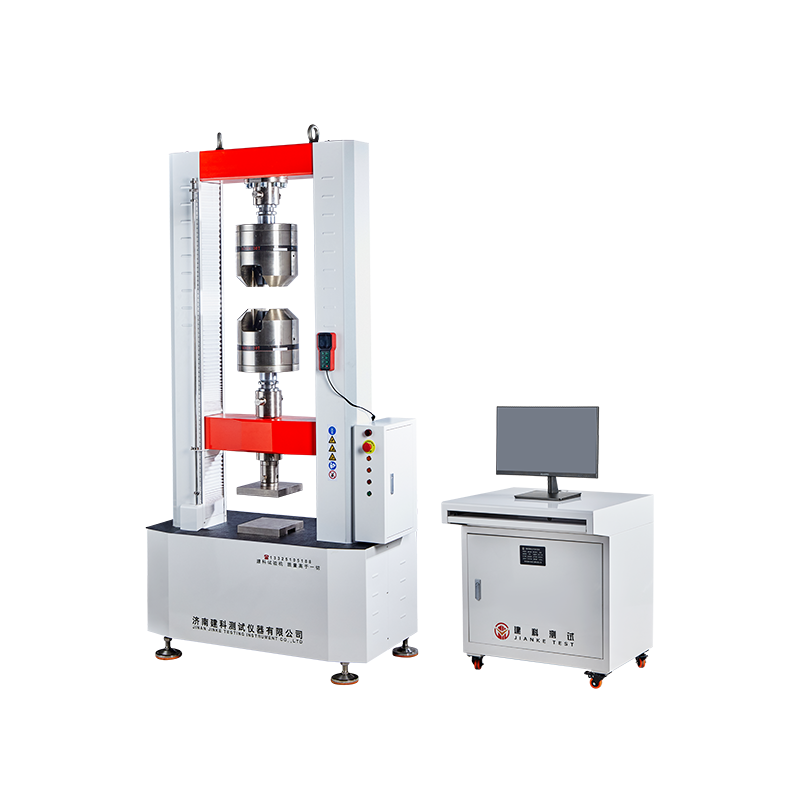
WDW-300 — Computer controlled electronic universal testing machine Hydraulic clamping. Product illustration. Confirm the exact configuration for your specimens.
Compare agreed deliverables instead of brochure labels
Send the same application information to every supplier. Include specimen drawings, materials, force and extension ranges, required properties, methods, and the destination. Ask each manufacturer to identify assumptions and unsupported requirements. When a configuration differs from the original request, the technical reason should be written down rather than left inside a sales conversation.
Create a quotation matrix with separate rows for the frame, load cells, deformation devices, grips, software, calibration, installation, training, spare items, and documents. Identify whether each item is included, optional, or supplied by the buyer. Review operating limits and method compatibility alongside the commercial terms. This prevents a lower base price from being mistaken for a lower cost of usable testing capability.
Request a representative test and an exportable sample report before acceptance criteria are finalized. Ask who will provide support and what evidence is needed if a problem arises. Evaluate conformity documents against the offered configuration and destination requirements. A manufacturer relationship works best when the required capability, handover, and service route can be understood by both the purchasing department and the laboratory team.
An illustrative application review
An illustrative importer receives two offers for a nominally similar tester. One includes a suitable extensometer and a defined acceptance test, while the other lists both as options. The importer requests a revised comparison using the same required properties and commissioning scope. The exercise does not determine which supplier is automatically better. It establishes which delivered package meets the job and which costs or responsibilities remain outside the quoted price.
Send an RFQ that describes the testing job
A useful request for quotation starts with what the laboratory needs to measure. Include material families, specimen drawings, dimensional ranges, expected minimum and maximum loads, required properties, governing methods, and approximate daily workload. State whether the work involves finished parts, standard specimens, changing fixtures, or temperature-controlled testing. Attach representative photographs when a drawing alone does not explain the gripping problem.
Ask the quotation to distinguish the frame, force sensors, extensometers, grips, fixtures, software functions, calibration, installation, training, and consumable items. Specify the destination country, available utilities, language needs, and required delivery documentation. These details allow competing configurations to be compared on a common basis. A clear RFQ also reduces the chance that an apparently economical offer excludes the accessory needed to produce the very property that motivated the equipment purchase.
Compare lifetime operating costs with initial price
Purchase price covers only part of the laboratory's commitment. Include the fixtures and transducers needed for the intended workload, calibration, installation, training, consumables, utilities, software arrangements, and planned service. A configuration with a low base price can become expensive when essential measurement accessories or site work are added after delivery.
Ask suppliers to separate included items from options and explain the assumptions behind their recommendations. Estimate the cost of changing between test types and the effect of downtime on the testing schedule. A second sensor or a dedicated fixture can be valuable when it supports the required measuring range or reduces setup errors. Compare these benefits using the laboratory's own specimen mix. Avoid assigning a financial return to faster testing unless the full preparation, handling, and reporting workflow has also been considered.
Compare the delivered package for an overseas laboratory
International equipment purchasing involves the machine, its documentation, transport, installation responsibilities, and continuing support. Ask for a clear list of included accessories and identify which party provides unloading, utilities, positioning, commissioning, training, and calibration. Discuss packing dimensions, lifting information, transport insurance, delivery terms, and the documents required at the destination.
Product conformity requirements depend on the destination and supplied configuration. Request relevant documents for the exact offered model and verify their scope instead of treating a logo on a brochure as sufficient evidence. Agree the language of manuals and support, the process for remote diagnosis, and availability of replacement wear items. These decisions belong in the commercial and technical agreement. They help the buyer compare total usable capability, including the work needed to bring the equipment into routine service.
Write a practical handover checklist
Before shipment, reconcile the purchase order with an itemized packing list and the acceptance record. Identify the frame, controller, sensors, extensometers, grips, fixtures, adapters, tools, cables, manuals, software, and verification documents. Photograph or otherwise record critical assemblies where that helps the receiving team recognize the intended installation.
After delivery, inspect packaging and equipment condition before positioning and energizing the system. Follow the supplier's commissioning sequence and record any transport issue or incomplete accessory. Assign responsibility and a target date for outstanding items. The handover should end with the laboratory able to run its approved demonstration, locate its documentation, save and recover data, and identify the support route. This is more informative than a delivery signature alone when assessing whether the purchased testing capability is ready for use.
Specify an actionable support arrangement
Ask how the supplier will diagnose a measurement or control problem after installation. Identify the information needed for remote support, the contact route, response arrangements, and the people authorized to change settings. A useful service record includes the machine identifier, symptoms, method, relevant curves, error messages, and recent maintenance or accessory changes.
Clarify warranty scope, consumables, spare-part availability, and which work requires a visit or a calibration provider. Keep approved software and configuration backups so that a computer replacement does not erase the testing method. For overseas laboratories, discuss time zones, language, shipment of replacement items, and local service responsibilities. These details make support more predictable and help the buyer assess whether the proposed machine can remain a usable part of the laboratory rather than simply pass its first demonstration.
Demonstrate software with a complete test record
Software evaluation should include method creation, specimen entry, live control, calculation, report generation, data export, and retrieval of an older test. Ask the operator to explain each reported value using its underlying channel and calculation. Attractive curves and a long list of named standards are less informative than a transparent demonstration of the exact method the buyer intends to use.
Confirm user permissions, language options, supported operating systems, licensing terms, backup locations, and the procedure for replacing the computer. Determine whether exported data can be read independently and whether historical methods remain identifiable after an update. Establish who can modify templates and how the laboratory records approval of a change. An application should help preserve the testing procedure, while the laboratory retains responsibility for choosing and validating the correct settings for its specimens.
Turn the acceptance test into a repeatable demonstration
Agree the acceptance procedure while the configuration is still being selected. List the representative materials, specimen dimensions, fixtures, measurement channels, method stages, and report fields that will be demonstrated. Specify how the buyer will assess operation, data export, protective functions, and the delivered accessories. A generic video of an unrelated specimen provides little evidence for a demanding application.
Acceptance criteria should reflect an agreed procedure and appropriate verification rather than a promise that every sample will return the same material strength. Compare repeated tests with attention to specimen variation and preparation. Record the serial numbers, software version, settings, and any outstanding items. If a factory test is followed by site acceptance, define which checks are repeated after transport. This creates a useful handover record and gives both parties a clear basis for resolving a configuration question.
Keep units and calculations visible
Force, stress, displacement, and strain describe different quantities. A force value in kN becomes stress only after division by a defined area, while strain relates a measured extension to an identified original gauge length. Keep those quantities separate in specimen entry, live display, data exports, and customer reports. Avoid accepting a column labelled strength when its stored numbers actually represent load.
As a simple arithmetic check, a 10 kN force acting over an original area of 20 square millimetres gives an engineering stress of 500 MPa. This is an illustrative calculation, not an expected result for any material or a product specification. Review rounding, significant figures, and unit conversion rules in the reporting workflow. A test system should allow the laboratory to explain how the reported property follows from the recorded measurement and specimen geometry.
Frequently asked questions
What information should a manufacturer provide before an order?
Request a configuration tied to your specimens and methods, accessory ratings, relevant measurement verification, sample data and reports, an itemized scope, installation requirements, and documented acceptance and support arrangements.
What should I send with a configuration inquiry?
Send specimen drawings or photographs, material and dimension ranges, expected forces, required properties, test methods, workload, and installation conditions. Ask the supplier to identify the proposed sensors, grips, software functions, verification, and acceptance procedure. A representative sample demonstration can help resolve details that a model name alone cannot establish.
Discuss the application with Jinan Jianke
Jinan Jianke supplies material testing equipment for laboratory and production applications. Use the WDW-300 product page as a starting point for an application discussion. Send your specimen information and required method through our contact page, and request a configuration-specific proposal, documentation, and representative test evidence.
Standards references
Identify the method applicable to your material and contract, and consult its full requirements. Relevant official catalogue entries include ISO 6892-1, ASTM E8/E8M. Listing a standard does not establish conformity of a particular machine configuration or completed test.
Talk to an application specialist
Request a Quote
Share your testing requirements. We will reply with a suitable configuration and quotation within one business day.
Technical selectionWorldwide deliveryAfter-sales support